
The Demography Deception: Dark Secrets of Population Data

In 2026, demography is the “Master Algorithm” of control. Explore the dark secrets of population studies—from biometric surveillance to the “Digital Eugenics” of fertility planning. Learn why the official “Demographic Transition” narrative is a delusion hiding a global “Logic Error.”

At Iverson Software, we specialize in debugging complex systems. In 2026, the global population system is facing a “Logic Error.” While the official narrative focuses on “Sustainable Growth,” the data suggests we are entering a period of unprecedented Demographic Volatility.

1. The “Biopolitical Filter”: Surveillance in the Name of Health

The most significant “dark secret” of 2026 is the transition from public health to Population Surveillance.

  • Biometric Bordering: Migration is no longer managed by passports alone, but by “Biometric Risk Profiles.” Governments are using demographic data to predict “Social Friction,” often leading to the pre-emptive exclusion of entire groups based on automated “un-assimilability” scores.

  • The “Power to Kill Life Itself”: Drawing from Foucault’s biopolitics, sociologists are identifying how modern states use demographic “omission”—purposefully undercounting marginalized groups—to deny them essential services, effectively “killing” their social existence.

2. Digital Eugenics: The Algorithmic Bias in “Birth Planning”

The dream of “planning” a population has taken a digital turn, leading to a “Silent Eugenics” powered by AI.

  • Algorithmic Redlining of Fertility: In 2026, AI-driven insurance and mortgage models are beginning to “penalize” certain demographic groups based on projected fertility rates. If an algorithm predicts you are “at risk” of having children, your “Economic Credit” may be secretly downgraded.

  • The “Quantified Embryo”: As fertility rates plummet in the Global North, the “quality” of children is being prioritized over the quantity. This has led to a resurgent “Positive Eugenics,” where genetic data is used to create “Achievement-Based” demographic cohorts.

3. The “Youth Deficit” and the Aging Inversion

The world is facing an “Inverted Pyramid” crisis that is being quietly managed through austerity.

  • The Silver Tsunami’s Shadow: As populations in the MDCs (More Developed Countries) age, the “Social Contract” is being rewritten. “Aging-in-Place” technologies are often being used as “Social Isolation” tools, replacing human care with “Automated Care Agents” to reduce the fiscal burden on the state.

  • The Youth Scarcity Conflict: In societies with a “Youth Deficit,” the remaining young adults are being burdened with “Intergenerational Debt” that is mathematically impossible to pay off. Sociologists call this the “Quiet Crisis”—a systemic extraction of value from the young to support an aging elite.

4. Demographic Delusions: Why the Projections are Wrong

Perhaps the darkest secret is that our “Official Data” is often a “Wishful Projection.”

  • Recalcitrant Growth: Recent 2026 critiques suggest that the UN and other bodies have consistently underestimated global growth by “revising the past.” By deeming extra people to have been born earlier, they maintain a model of “steady decline” that masks the actual pressure on planetary boundaries.

  • The “Floor and Ceiling” Conflict: We are caught in a “Goldilocks Zone” where the resources required for a “just” society (the floor) are increasingly crashing into the maximum sustainable impact on the planet (the ceiling).


Why Demographic Secrets Matter to Your Organization

  • Strategic Blind Spots: Relying on “cleaned” UN projections can lead to massive errors in global market forecasting and supply chain planning.

  • Ethical Liability: Using AI-driven demographic profiles for hiring or insurance can expose your organization to “Algorithmic Bias” lawsuits under the new 2026 Privacy Acts.

  • Labor Market Volatility: The “Youth Scarcity” in major economies means that your workforce strategy must shift from “recruitment” to “AI-Human Collaboration” to survive.
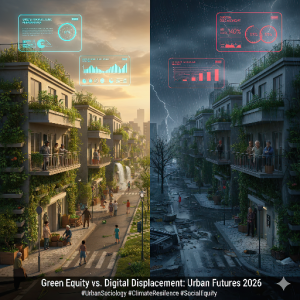
The Algorithmic City: Urban Sociology in 2026

In 2026, cities are living algorithms. Explore how Urban Sociology is “debugging” metropolitan life, from the hidden biases of predictive policing to the human cost of automated gentrification. Learn why understanding the “Source Code of the City” is essential for navigating the future.

At Iverson Software, we specialize in system analysis. In Urban Sociology, the 2026 narrative is dominated by the tension between the “Smart City” vision and the persistent “Human-Centric Challenges.” As metropolitan areas integrate AI-driven infrastructure and grapple with the aftershocks of global pandemics, the social fabric is undergoing a profound refactoring.

1. Algorithmic Urbanism: The “Invisible Hand” of the City

The most transformative force shaping cities in 2026 is Algorithmic Urbanism – where AI optimizes everything from traffic flow to public safety.

  • Predictive Policing 2.0: Digital sociologists are analyzing how AI-powered predictive policing systems are evolving. While promising efficiency, these systems often reproduce and intensify existing social biases, leading to “Algorithmic Redlining” where certain neighborhoods are disproportionately surveilled.

  • Dynamic Infrastructure: Cities are deploying “Smart Grids” and “Adaptive Transportation Networks” that use real-time data to respond to urban needs. However, the “Black Box” nature of these algorithms raises critical questions about transparency, accountability, and citizen consent.

2. The Housing Affordability Crisis & The “Rent Burden”

The escalating cost of urban living remains a central conflict, creating a deepening divide between residents.

  • Digital Displacement: The rise of algorithmic short-term rental platforms and AI-driven gentrification models (which predict desirable neighborhoods) are accelerating the “Digital Displacement” of long-term residents. Sociologists are mapping these new patterns of “Automated Gentrification.”

  • Co-Living & Micro-Units: As a response, “Co-Living Spaces” and ultra-compact “Micro-Units” are becoming mainstream, particularly among younger generations. This trend is sparking sociological debate about the impact on privacy, community, and the definition of a “home.”

3. Climate-Resilient Urbanism: Adapting to Extreme Events

Cities are on the front lines of climate change, demanding rapid adaptation and innovative social responses.

  • Green Infrastructure & Social Equity: The push for “Green Infrastructure” (e.g., permeable pavements, urban forests, vertical farms) is gaining momentum. However, urban sociologists are highlighting the need for “Green Equity” – ensuring these benefits are distributed fairly across all neighborhoods, not just affluent ones.

  • Post-Disaster Social Capital: After extreme weather events, communities often exhibit remarkable “Social Capital” and self-organization. Studies in 2026 are focusing on how to systematically cultivate this resilience before disasters strike, integrating informal networks into formal emergency response plans.


Why Urban Trends Matter to Your Organization

  • Market Strategy: Understanding shifts in housing, transportation, and consumption patterns is crucial for product development and service delivery in dense urban centers.

  • Workforce Planning: Attracting and retaining talent in cities requires a deep understanding of urban livability, including affordability, public safety, and access to amenities.

  • ESG Compliance: Investing in sustainable urban development and addressing social inequalities in cities is increasingly vital for corporate social responsibility and stakeholder trust.

The Rural Refactor: Social Structures & Conflict in 2026

In 2026, the countryside is the “source code” for global stability. Explore how Rural Sociology is debugging the conflicts over water rights, the social impact of “Livestock AI,” and the rise of climate-driven migration hubs. Learn why the “Rural Burden” is the next big challenge for corporate social responsibility.

At Iverson Software, we analyze complex systems. In Rural Sociology, the 2026 update is about the friction between “Long-Standing Tradition” and “Rapid Digital Transformation.” As non-urban areas integrate AI-driven machinery and face intensifying climate pressures, the social fabric is being pulled in two directions: toward global efficiency and local resilience.

1. The Digital Agrarian Divide: AI and Social Power

The most visible shift in 2026 is the emergence of Precision-Powered Class Structures.

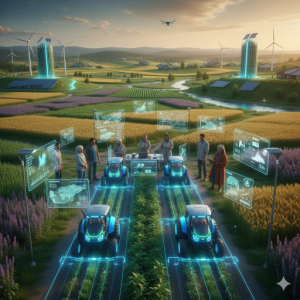
  • The “Data Engine” Farm: As rural operations evolve into powerful data engines, a new social hierarchy is forming. Large-scale growers with the capital to invest in autonomous tractors and “Livestock AI” are pulling ahead, while smaller operations face a steep adoption curve.

  • Technological Dispossession: Rural sociologists are tracking “Technological Dispossession”—where the high cost of smart equipment and software subscriptions forces smaller farmers into “Shadow Labor” roles or causes them to exit the industry entirely.

2. Natural Resource Conflicts: The War for Senior Water Rights

As weather patterns shift in early 2026, the management of natural resources is triggering local “Micro-Conflicts.”

  • Water Sovereignty: In arid regions like the American Southwest, “Senior Water Rights” have become the new currency of power. Conflicts are erupting between traditional agriculturalists, expanding suburban developers, and indigenous communities over who controls the dwindling “Blue Gold.”

  • The Energy Burden: Rural communities are increasingly at the center of the “Renewable Transition.” Sociologists are documenting local opposition to utility-scale solar and wind developments—a phenomenon known as the “Rural Burden,” where rural landscapes are utilized for urban energy needs.

3. Rural Resilience & The “Quiet Crisis”

Beyond the headlines, rural areas are facing a demographic reshuffling that is redefining community life.

  • The Silver Tsunami in the Fields: Rural populations are aging rapidly. Sociologists are studying the “Care Gap”—the lack of healthcare and financial support for older adults in isolated areas.

  • Climate Havens: Parts of the Upper Midwest and Pacific Northwest are becoming “Newly Attractive” hubs for agriculture and migration due to moderate climates. This is creating a “Demographic Boom” that strains local infrastructure while offering a rare chance for community revitalization.

4. Justice in the Heartland: Advocating for the Unseen

The 2026 Rural Sociological Society theme, “Advocating for Justice,” highlights the move toward legal and social equity in the countryside.

  • Beyond the Law: Sociologists are partnering with legal scholars to tackle “Law-and-Society” issues in rural areas—from immigration and land-use disputes to the “Opioid Empathy Gap.”

  • Food & Energy Justice: The focus has shifted to “Just Transitions,” ensuring that the move to a green economy doesn’t leave rural labor behind.


Why Rural Trends Matter to Your Organization

  • Supply Chain Integrity: Understanding rural social conflicts is key to predicting disruptions in food and resource availability.

  • ESG and Rural Impact: Organizations must ensure their sustainability initiatives (like carbon offsets or renewable projects) don’t impose a “Rural Burden” on local communities.

  • Emerging Markets: The “Climate Haven” shift creates new opportunities for localized services, rural broadband infrastructure, and diversified income models for younger farmers.

    The image provided for precision agriculture illustrates the integration of high-tech data collection and automation into modern farming.
    Sowing the Seeds of Data: Precision Agriculture in 2026

Planetary Feedback Loops: Societies, Environment, and Climate in 2026

In 2026, the planet is talking back. Explore how societies are “debugging” their relationship with the environment, from the urgency of climate migration to the wisdom of Indigenous knowledge. Learn why “Societal Resilience Audits” are now essential for every organization.

At Iverson Software, we specialize in system diagnostics. The relationship between human societies and their physical environment is, in 2026, a series of increasingly intense feedback loops. Our actions directly impact the planet, and the planet’s reactions are now directly impacting our social structures, economies, and very definitions of stability. This year’s focus is on “Societal Resilience Audits”—how well are we prepared for the inevitable, and how effectively can we adapt?

1. The Climate Migration Imperative: Shifting Populations

One of the most profound societal shifts of 2026 is the acceleration of Climate Migration.

  • Forced Displacement: Millions are being displaced by sea-level rise, desertification, and extreme weather events. Digital sociologists are mapping these “Climate Corridors,” observing the emergence of new social structures among displaced communities.

  • “Climate Havens” & Social Strain: The influx of climate migrants into historically stable regions (often in the Global North) is creating both opportunities for demographic revitalization and significant social and economic strain. New “Integration Protocols” are being developed to manage these population shifts.

2. Eco-Communities & Degrowth: Redefining “Progress”

A powerful counter-narrative to traditional industrial models is the rise of Eco-Communities and the philosophy of Degrowth.

  • The “Local Resilience Grid”: Around the world, communities are investing in hyper-local food systems, renewable micro-grids, and shared resource models. These are not just sustainable practices but a social statement, rejecting globalized consumption in favor of local self-sufficiency.

  • Degrowth as a Social Movement: The “Degrowth” movement, once fringe, is gaining academic and political traction. It posits that true sustainability requires a conscious reduction in resource consumption and a redefinition of “well-being” away from endless economic growth.

3. Indigenous Knowledge Integration: Ancient Wisdom, Modern Solutions

As Western science grapples with complex ecological crises, there is a profound resurgence of interest in Indigenous Knowledge Systems.

  • “Nature-Based Solutions”: Governments and NGOs are actively partnering with Indigenous communities to implement “Nature-Based Solutions” for reforestation, water management, and biodiversity preservation. These systems often offer more holistic and effective approaches than purely technological fixes.

  • Epistemic Reconciliation: This integration is more than just borrowing techniques; it’s a “Decolonization of Knowledge,” acknowledging that Indigenous worldviews offer crucial insights into living in reciprocal relationship with the Earth.

4. Carbon Capture & Geoengineering: The Technological Gamble

While social solutions gain traction, the allure of large-scale technological interventions persists.

  • Moral Hazard Debate: The rapid development of carbon capture technologies and nascent geoengineering proposals (like solar radiation management) presents a significant “Moral Hazard.” Sociologists are debating whether these technologies reduce the urgency for fundamental societal change.

  • Global Governance Challenge: The deployment of such technologies requires unprecedented global cooperation and raises critical questions about equity, accountability, and the potential for unintended environmental and social consequences.


Why this Relationship Matters to Your Organization

  • Risk Management: Understanding climate migration patterns and extreme weather impacts is crucial for supply chain resilience and strategic infrastructure planning.

  • Innovation Opportunities: The rise of eco-communities and degrowth principles creates new markets for sustainable products, circular economy models, and localized services.

  • Ethical Leadership: Integrating Indigenous knowledge and addressing environmental justice issues are becoming non-negotiable for brand reputation and stakeholder engagement.

The Algorithmic Self: Digital Sociology in 2026

In 2026, the digital world is the only world. Explore how Digital Sociology is “debugging” our reality, from the rise of the “Cyber-Self” to the “Invisible Power” of algorithmic governance. Learn why understanding the “Source Code of Society” is essential for surviving the AI-driven future.

At Iverson Software, we see society as a complex, networked system. In Digital Sociology, the current focus is on how our “Digital Twins” (the data versions of ourselves) are increasingly influencing our physical lives. Whether it’s an AI agent scheduling your day or a social credit algorithm determining your insurance rates, the “Digital” is no longer just a place we visit—it’s the infrastructure we inhabit.

1. Algorithmic Governance & The “Black Box” of Power

In 2026, the most significant shift is the transition from human-led policy to Algorithmic Mediation.

  • The “Invisible Manager”: Digital sociologists are analyzing how algorithms now act as “Power Brokers” in everything from hiring to predictive policing. This “Black Box” governance often reproduces legacy biases (racism, sexism, classism) while appearing objectively neutral.

  • Resistance Protocols: We are seeing the rise of “Algorithmic Literacy” as a form of social activism. Communities are learning to “hack” or “game” these systems to reclaim agency, leading to a new era of Digital Sovereignty.

2. The Rise of the “Cyber-Self” and Synthetic Sociality

How do we maintain a “Self” when our social interactions are increasingly mediated by AI?

  • Agentic Sociality: In 2026, many of us interact with Agentic AI—bots that don’t just chat but take actions. Sociologists are studying how these “Synthetic Actors” change our expectations of friendship, labor, and community.

  • The Performance of Identity: On platforms like the “Enhanced Metaverse,” identity is no longer fixed. The “Cyber-Self” is a fluid, high-fidelity avatar that allows for radical experimentation with gender, race, and physical form, forcing a “System Reset” on traditional sociological categories of identity.

3. Digital Inequality & The “Connectivity Apartheid”

Despite the promise of a global village, 2026 is seeing a deepening of the Digital Divide.

  • Information Ghettos: While some enjoy high-speed, AI-augmented lives, others are relegated to “low-bandwidth” zones with limited access to essential digital services. Digital sociologists are mapping this “Connectivity Apartheid,” showing how lack of access is the new driver of class struggle.

  • The Labor of Annotation: Behind every “clean” AI is the “dirty” work of millions of human data annotators, often in the Global South. Digital sociology is exposing this “Shadow Labor” to ensure that the AI revolution doesn’t come at the cost of human dignity.

4. Digital Research Methods: The “New Toolbox”

The way we do sociology is also being “refactored.”

  • Computational Ethnography: Sociologists are now using AI to analyze millions of social media posts, identifying “Cultural Echoes” that were previously invisible to human researchers.

  • Digital Ethics 2.0: With the ability to monitor behavior in real-time, the field is developing new “Ethical Guardrails” to protect privacy and ensure that “Big Data” doesn’t become “Big Brother.”


Why Digital Sociology Matters to Your Organization

  • Risk Intelligence: Understanding “Algorithmic Bias” can help companies avoid reputational damage and legal challenges.

  • Human-Centered Design: By applying sociological insights, developers can build digital tools that actually enhance social cohesion rather than eroding it.

  • Workforce Strategy: As “Human-AI Collaboration” becomes the norm, organizations need sociological frameworks to manage the cultural shifts in the workplace.

The Social Construction of Truth: 2026 Update

In 2026, truth is no longer a given—it’s a social output. Explore how the Sociology of Knowledge is “debugging” our post-truth reality, from algorithmic gatekeepers to the rise of “Affective Governance.” Learn why your “Mental Firmware” needs a 2026 update to survive the digital jungle.

At Iverson Software, we understand that data is never neutral. The Sociology of Knowledge teaches us that what we consider “fact” is often a product of our social position, power dynamics, and the technological tools we use to perceive the world. In 2026, the field is tackling the “Validation Crisis,” where traditional institutions of truth—science, journalism, and academia—are competing with decentralized, often AI-driven, knowledge systems.

1. The Post-Truth Protocol: Emotions Over Evidence?

In 2026, sociologists are “debugging” the post-truth phenomenon, where emotional appeal often overrides factual accuracy.

  • The “Informalisation” of Truth: Researchers are analyzing how the decline of traditional social hierarchies has led to a “flat” information landscape. In this environment, the “Social Currency” of tribal alignment often replaces the shame of being factually incorrect.

  • Affective Governance: We are seeing a shift toward “Affective Governance,” where knowledge is validated not by its empirical rigor, but by how well it resonates with a group’s shared emotional identity.

2. Algorithmic Epistemology: Who Programs Your Reality?

The most significant development this year is the study of how algorithms act as “Knowledge Gatekeepers.”

  • The “Black Box” Problem: We are increasingly reliant on AI to filter and present information. Sociologists are investigating how the opaque nature of these algorithms creates “Epistemic Bubbles,” where users are only exposed to knowledge that confirms their existing “Mental Firmware.”

  • AI Sovereignty: As nations in 2026 race to build their own “Sovereign LLMs,” the sociology of knowledge is tracking how these models encode specific national, cultural, and political ideologies into their “Source Code.”

3. The Return of the Intellectual: Expertise in a Gig Economy

The role of the “Expert” is being redefined. In a world of instant information, what is the value of deep knowledge?

  • The “Skills Gap” in Epistemology: 2026 higher education trends show a move toward “AI Literacy” as a core competency. It’s no longer just about what you know, but your “Epistemic Agency”—the ability to interrogate, verify, and ethically apply information in an automated world.

  • Standpoint Theory 2.0: Contemporary theorists are reviving “Standpoint Theory” to argue that marginalized groups have a unique “Epistemic Advantage” in identifying the blind spots of dominant, AI-driven knowledge systems.

4. Climate Knowledge and “Post-Disaster Solidarity”

As climate disasters accelerate in 2026, the sociology of knowledge is exploring how communities build “Resilience Knowledge.”

  • Leveraging Solidarity: Researchers are mapping how “Post-Disaster Solidarity” can be transformed into political action. This involves creating new “Social Narratives” that prioritize long-term communal survival over short-term economic gains.

  • The “Commons” of Knowledge: There is a growing movement to treat data and scientific research as a “Global Commons,” ensuring that the knowledge needed for climate adaptation isn’t locked behind corporate paywalls.


Why the Sociology of Knowledge Matters to Your Organization

  • Risk Mitigation: Understanding the “Social Roots” of misinformation can help you protect your brand from “Viral System Crashes.”

  • Ethical AI Development: By applying sociological insights, developers can build AI systems that are transparent, culturally aware, and “Epistemically Responsible.”

  • Strategic Foresight: Analyzing the “Shifting Paradigms” of what society considers “True” allows leaders to stay ahead of cultural and regulatory changes.

The Algorithmic Hearth: Sociology of the Family in 2026

In 2026, the family is a design project. Explore how the Sociology of the Family is “debugging” polyamorous architectures, the gamification of parenting, and the ethical dilemmas of AI as a family member. Learn why “Intentional Kinship” is the new blueprint for resilience in a data-driven world.

At Iverson Software, we optimize human connections. In the Sociology of the Family, 2026 is being defined by a move toward “Intentional Kinship.” Individuals are no longer simply inheriting family structures; they are actively “designing” their domestic units to optimize for care, shared values, and resilience in a volatile world.

1. Polyamorous Architectures: Beyond Monogamy’s “Default Setting”

The most significant shift in 2026 is the mainstreaming of Ethical Non-Monogamy as a valid and structurally complex family form.

  • The “Networked Family”: Sociologists are mapping “Polyamorous Architectures”—not just individuals with multiple partners, but interconnected households that share resources, childcare, and emotional labor. This challenges the legal and economic frameworks built around dyadic relationships.

  • Legal Recognition: As of early 2026, several municipalities in the US and Canada are exploring legal recognition for “Multi-Partner Domestic Unions” to provide shared benefits and inheritance rights.

2. The Gamification of Parenting and the “Achievement Child”

Parenting in 2026 has become a data-driven pursuit.

  • The “Quantified Child”: Wearable tech for infants and AI-powered educational apps create a “Parenting Dashboard.” Every milestone, tantrum, and learning moment is tracked, analyzed, and often shared, leading to “Social Pressure” to optimize child development.

  • Achievement-Based Motherhood: Sociologists are critiquing “Achievement-Based Motherhood,” where a mother’s worth is tied to her child’s measurable performance. This creates new forms of “Digital Envy” and maternal burnout.

3. The Algorithmically Mediated Home: AI as a “Family Member”

AI is no longer just a tool in the home; it’s an Active Participant in family life.

  • The “Emotionally Intelligent” Assistant: Advanced AI assistants (like “Aura” and “Nexus”) can now detect mood, mediate arguments, and even offer “personalized comfort” to family members. Sociologists are debating their impact on emotional intelligence and genuine human empathy.

  • Dataveillance in the Domestic Sphere: The convenience of the “Smart Home” comes with a “Privacy Premium.” Family data—from sleep patterns to conversations—is being collected, raising ethical questions about who owns the “Algorithmic Hearth.”

4. The “Demographic Cliff” and Intergenerational Resilience

As highlighted in our Demography report, 2026 sees the “Silver Tsunami” impacting family structures.

  • The Sandwich Generation’s Strain: The burden on the “Sandwich Generation” (caring for both children and aging parents) is reaching critical levels. Sociologists are studying models of “Co-Housing” and “Communal Care” to distribute this labor.

  • Legacy Design: Families are proactively engaging in “Legacy Design,” structuring finances, legal documents, and care plans to ensure intergenerational support, often involving non-biological “chosen family” networks.


Why Sociology of the Family Matters to Your Organization

  • Employee Well-being: Understanding the complexity of modern family structures (e.g., polyamory, blended families) allows for more inclusive and flexible HR policies (e.g., expanded leave, diverse benefits).

  • Product Design: For consumer goods and tech, designing for the “Algorithmically Mediated Home” requires deep ethical consideration of privacy and the impact on family dynamics.

  • Market Opportunity: The “Silver Tsunami” creates new demands for products and services supporting elder care, intergenerational living, and “Aging-in-Place” technologies.

Beyond Sustainability: Environmental Sociology’s 2026 Pivot

In 2026, “sustainability” is the old firmware. Explore how Environmental Sociology is “Worldmaking”—rethinking democracy, AI’s massive water consumption, and the “Just Transition” needed to survive the Polycrisis. Learn why your “Green Strategy” must be a “Social Strategy” to succeed.

At Iverson Software, we analyze the interface between human systems and their environments. In Environmental Sociology, 2026 is the year of “Worldmaking.” Theorists are no longer just asking “How do we stop the crisis?” but “What kind of world are we building in its place?” This involves a radical rethink of democracy, technology, and justice in the face of the “Polycrisis.”

1. The “Worldmaking” Movement

A core theme for the 2026 sociological conferences is the concept of Worldmaking. This idea suggests that our everyday actions and social movements have the capacity to upend harmful systems and create new cultural logics.

  • Democratic Ecology: Sociologists are exploring how to protect democratic values while making the urgent, rapid decisions required by climate tipping points.

  • More-than-Human Sociology: There is a growing push to include the “agency” of non-human entities—animals, ecosystems, and even AI—into our sociological models of political community.

2. The AI-Environment Nexus: “Thirsty” Data Centers

In 2026, the tech “Cloud” is being revealed as a physical beast with a massive thirst. A single large data center can consume up to 2 million liters of water a day for cooling.

  • The Water Conflict: Communities in drought-prone regions (from Arizona to Chile) are pushing back, questioning why local aquifers should cool ChatGPT’s servers instead of sustaining crops.

  • Sustainable AI Governance: Environmental sociologists are working with engineers to design “Zero-Water” cooling systems and “Green AI” architectures that prioritize energy efficiency over raw processing power.

3. Just Transitions: Investing in People, Not Just Tech

The “Green Transition” is only successful if it is a Just Transition. In 2026, the focus has shifted from “techno-fixes” to the “Social Protection” of workers.

  • Retraining Protocols: Sociologists are mapping the socio-economic consequences for communities in fossil-fuel-dependent regions. A “Just Transition” roadmap now requires integrated public policies that include professional retraining and the creation of “Decent Green Jobs.”

  • Reparations and Equity: There is a renewed focus on redressing past environmental harms, particularly through “Anticolonial Environmental Sociology” which centers Indigenous knowledge and community land rights.

4. The Sociology of the “Polycrisis”

In 2026, we’ve realized that climate change isn’t an isolated event; it’s part of a Polycrisis where ecological, economic, and political “System Crashes” happen simultaneously.

  • Post-Disaster Solidarity: Researchers are studying how the “Mutual Aid” that arises during disasters (like the 2025 hurricanes) can be transformed into permanent political power.

  • The “Heat Gap” in Education: As discussed in our Sociology of Education report, temperature is now a primary equity issue. Environmental sociologists are documenting how “Heat Islands” in urban schools are creating new cognitive and academic divides.


Why Environmental Sociology Matters to Your Organization

  • Resource Security: Understanding “The Thirst of the Cloud” and local water politics is essential for any organization reliant on massive data infrastructure.

  • Social License to Operate: In 2026, a company’s value is tied to its “Measurable Performance” in the ecological transition—moving from box-ticking ESG to actual Nature-Based Solutions.

  • Resilience Planning: By using “Social-Ecological Modeling,” organizations can better anticipate the human impacts of climate-driven supply chain disruptions.

The Classroom Reset: Sociology of Education in 2026

In 2026, the classroom is a data-driven battlefield. Explore how the Sociology of Education is “debugging” the demographic cliff, the rise of “Agentic AI” in schools, and the controversial impact of universal school vouchers on segregation.

At Iverson Software, we analyze the systems that shape the future. In Sociology of Education, 2026 is being defined by a move toward “Precision Equity”—using data-driven insights to identify barriers to learning that were previously invisible. From “Heat Gaps” in infrastructure to the “Credentialing Crisis” in higher ed, sociologists are identifying the new root codes of academic achievement.

1. The “Demographic Cliff” and the Adult Learner Pivot

2026 marks the first year of a projected 15-year slide in the number of traditional-aged college undergraduates—a “math problem” that is forcing a total system refactor.

  • The New Majority: Institutions are pivoting toward the “New Majority”: adult, working, and returning learners. Sociologists are studying how “Start-Anytime” enrollment models and asynchronous coursework are essential for these non-traditional students.

  • Credentialing vs. Degrees: There is a massive shift toward Micro-credentials and Digital Badges. Research shows that undergraduate certificate earners grew by 11% this past year, as students prioritize ROI and immediate workforce outcomes over legacy degrees.

2. AI as a “Sociotechnical Force”: Beyond the Tool

Sociologists are warning that AI in 2026 is not just a study aid, but a force that reorganizes power within the school system.

  • Agentic AI & The Search Gap: “Agentic” AI systems now automate advising and course development. However, sociologists point to a new “Digital Divide”: the linguistic and infrastructure advantages that allow wealthy students to leverage cutting-edge AI while nearly one-third of the world remains offline.

  • The Algorithmic Mirror: Critical digital sociology is investigating how AI-driven admissions and assessments can reproduce structural biases, essentially “automating” legacy inequalities under the guise of technical objectivity.

3. The School Choice “Voucher Surge” & Resegregation

2026 is a pivotal year for the privatization of public education, particularly in the Southern U.S., where universal voucher systems are reaching full implementation.

  • The Rhetoric of Choice: Sociologists are mapping how “School Choice” policies often act as a pseudonym for resegregation. Research indicates that while choice is marketed as an equalizer, it frequently leads to “Micro-Segregation,” where public resources are transferred to private institutions that lack federal civil rights protections.

  • Funding vs. Fairness: The “Voucher Surge” in states like Texas and Mississippi is being scrutinized for its impact on Black and rural students, who may attend public schools that lose vital funding as a result of these “portable” education dollars.

4. Infrastructure as an Equity Issue: The “Heat Gap”

A surprising but urgent trend in 2026 is the sociology of School Infrastructure in the face of climate change.

  • Temperature as a Condition: Research now treats classroom temperature as a primary instructional condition. Students in schools without climate control are falling behind during heat waves, turning infrastructure into a measurable advantage for well-resourced districts.

  • The Math Achievement Gap: Studies from early 2026 highlight that climate extremes are widening the gap in math performance specifically, as cognitive fatigue from extreme heat disproportionately affects students in marginalized communities.


Why Sociology of Education Matters to Your Organization

  • Talent Pipelines: Understanding the shift toward Stackable Credentials allows HR teams to identify skilled candidates who may not have a traditional four-year degree.

  • Equity Audits: Organizations can use “Precision Equity” frameworks to audit their own internal training programs for algorithmic or structural biases.

  • Community Impact: For companies investing in CSR, the “Heat Gap” and “Infrastructure Equity” represent new frontiers for high-impact social investment.

The Great Rebalancing: Demography’s “New Era” in 2026

2026 is the year the “Population Pyramid” officially becomes an “Obelisk.” Explore how the Great Rebalancing is reshaping the world, from the “Silver Tsunami” in the West to the youth surge in Africa. Learn why migration is now the world’s most important “Economic Patch.”

At Iverson Software, we track data that defines the future. In Demography, 2026 is being hailed as the “Year of the Obelisk.” We are witnessing a fundamental structural change: the world’s population is not just aging; it is reconfiguring its geographic and economic foundations.

1. The Death of the “Generation Beta” Myth

Contrary to speculative reports in 2024 and 2025, demographic experts have confirmed as of late 2025 that we are not seeing the birth of a radical new “Kizazi Beta” (Beta Generation) with fundamentally different birth trends.

  • Stability Over Upheaval: Global birth rates have remained relatively stable across 2025. Instead of a new generational “boom,” demographers are focusing on the continued, steady decline in fertility across industrialized nations.

  • The “Replacement Gap”: Two-thirds of humanity now live in countries with fertility rates below the replacement level of 2.1 births per woman.

2. The “Cross-Over”: Deaths Outpacing Births

In many developed economies, 2026 marks a symbolic and statistical milestone: Natural Population Decline.

  • The UK Benchmark: For the first time in over a century (outside of pandemic anomalies), deaths in the UK are projected to exceed births by an ever-widening margin starting this year.

  • The “Silver Tsunami”: In the U.S., the oldest Baby Boomers turn 80 this year. This is triggering a massive shift in health care spending, housing markets, and labor supply.

3. Migration as the “Growth Engine”

Because natural growth (births minus deaths) is stalling in the West and East Asia, International Migration has become the primary driver of economic survival.

  • Labor Force Patching: By mid-2026, immigration will be the only reason the working-age population is growing in 52 countries, including the U.S., Canada, and Australia.

  • The Climate Displacement Factor: Climate-related events are increasingly shaping these migration patterns. 2026 is seeing a rise in “Internal Displacement” in resource-limited regions, placing immense pressure on urban infrastructure in sub-Saharan Africa.

4. The “Youth Surge” in Sub-Saharan Africa

While Europe and China shrink, Africa is the “Growth Hub” of 2026.

  • Fastest Growing Continent: Projections for 2026 confirm that sub-Saharan Africa will continue its massive rise, set to double its population by mid-century.

  • The Humanitarian Risk: Conflict and food insecurity in regions like Sudan, Mali, and Myanmar are creating the largest refugee crises demographers have recorded in decades. These areas account for 89% of global humanitarian needs in 2026.


Why Demography Matters to Your Organization

  • Workforce Planning: With a shrinking pool of young workers, companies must invest in Automation and Lifelong Learning to maintain productivity.

  • Market Adaptation: Seniors will account for one-quarter of global consumption by 2050. If your product isn’t designed for an aging user base, you are ignoring the fastest-growing market on Earth.

  • Strategic Geography: The centers of global labor and consumption are shifting toward the developing world. Prosperity in 2026 depends on understanding these new “Power Hubs.”