
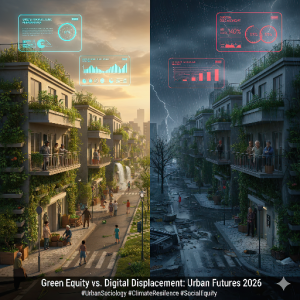
At Iverson Software, we specialize in system analysis. In Urban Sociology, the 2026 narrative is dominated by the tension between the “Smart City” vision and the persistent “Human-Centric Challenges.” As metropolitan areas integrate AI-driven infrastructure and grapple with the aftershocks of global pandemics, the social fabric is undergoing a profound refactoring.
1. Algorithmic Urbanism: The “Invisible Hand” of the City
The most transformative force shaping cities in 2026 is Algorithmic Urbanism – where AI optimizes everything from traffic flow to public safety.
-
Predictive Policing 2.0: Digital sociologists are analyzing how AI-powered predictive policing systems are evolving. While promising efficiency, these systems often reproduce and intensify existing social biases, leading to “Algorithmic Redlining” where certain neighborhoods are disproportionately surveilled.
-
Dynamic Infrastructure: Cities are deploying “Smart Grids” and “Adaptive Transportation Networks” that use real-time data to respond to urban needs. However, the “Black Box” nature of these algorithms raises critical questions about transparency, accountability, and citizen consent.
2. The Housing Affordability Crisis & The “Rent Burden”
The escalating cost of urban living remains a central conflict, creating a deepening divide between residents.
-
Digital Displacement: The rise of algorithmic short-term rental platforms and AI-driven gentrification models (which predict desirable neighborhoods) are accelerating the “Digital Displacement” of long-term residents. Sociologists are mapping these new patterns of “Automated Gentrification.”
-
Co-Living & Micro-Units: As a response, “Co-Living Spaces” and ultra-compact “Micro-Units” are becoming mainstream, particularly among younger generations. This trend is sparking sociological debate about the impact on privacy, community, and the definition of a “home.”
3. Climate-Resilient Urbanism: Adapting to Extreme Events
Cities are on the front lines of climate change, demanding rapid adaptation and innovative social responses.
-
Green Infrastructure & Social Equity: The push for “Green Infrastructure” (e.g., permeable pavements, urban forests, vertical farms) is gaining momentum. However, urban sociologists are highlighting the need for “Green Equity” – ensuring these benefits are distributed fairly across all neighborhoods, not just affluent ones.
-
Post-Disaster Social Capital: After extreme weather events, communities often exhibit remarkable “Social Capital” and self-organization. Studies in 2026 are focusing on how to systematically cultivate this resilience before disasters strike, integrating informal networks into formal emergency response plans.
Why Urban Trends Matter to Your Organization
-
Market Strategy: Understanding shifts in housing, transportation, and consumption patterns is crucial for product development and service delivery in dense urban centers.
-
Workforce Planning: Attracting and retaining talent in cities requires a deep understanding of urban livability, including affordability, public safety, and access to amenities.
-
ESG Compliance: Investing in sustainable urban development and addressing social inequalities in cities is increasingly vital for corporate social responsibility and stakeholder trust.
